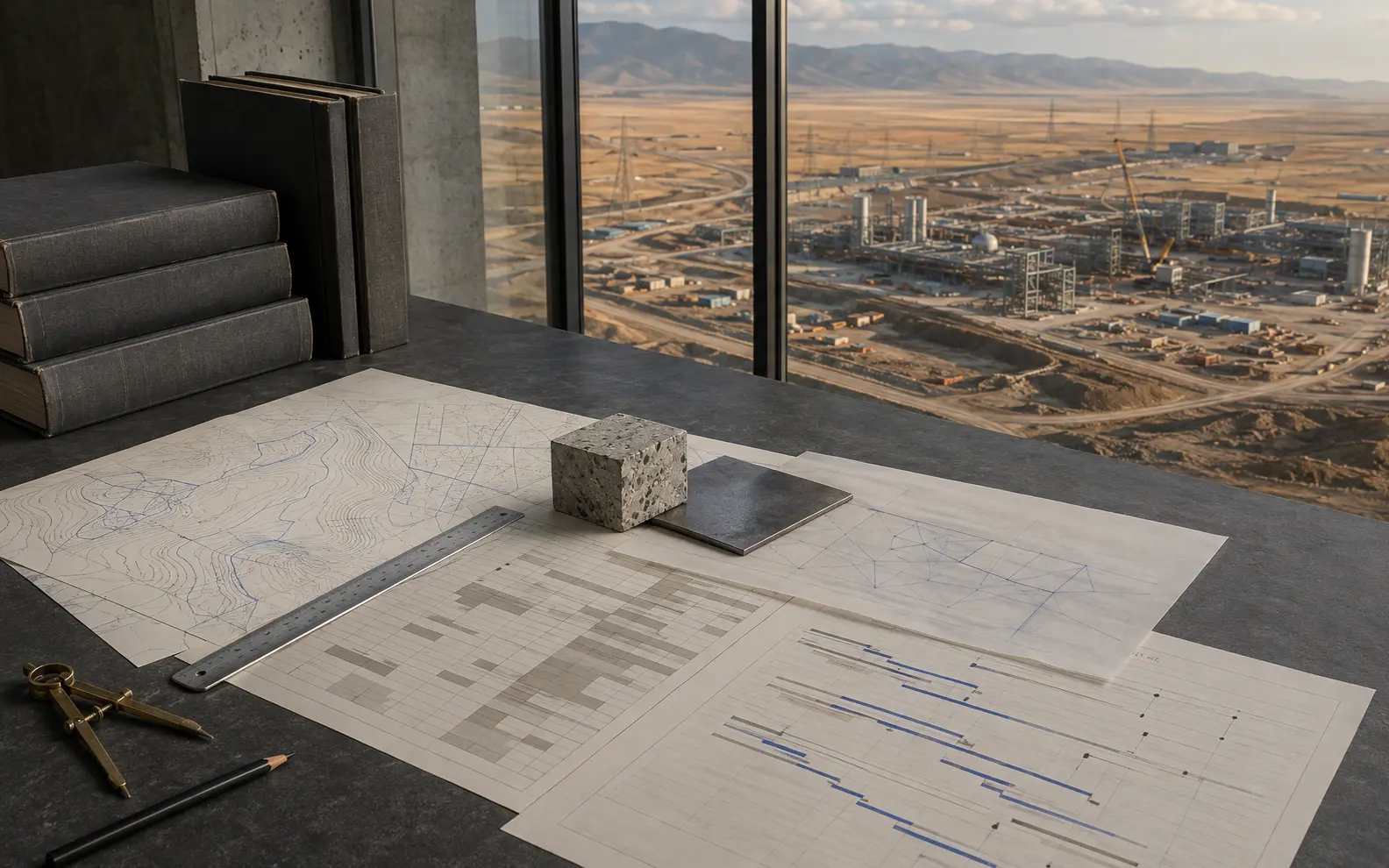
Start with the operating basis, not the map
Define the required power, water, gas, drainage, logistics, workforce access, environmental interfaces, safety distances and expansion allowance before comparing locations. Without this basis, a shortlist rewards what is easy to see rather than what the facility needs to operate.
Test land and planning evidence
Screen the designated use, boundaries, access, easements, planning context and known development constraints. Public maps and seller information are useful starting points, but ownership, permitted use and other legal matters require current documents and, where needed, qualified legal review.
Treat utilities and ground conditions as projects
A nearby network is not the same as confirmed capacity. Record the proposed connection point, capacity basis, route, upgrades, responsible party and evidence status. Ground, seismic, drainage, flood and contamination questions should be translated into surveys or investigations, not hidden inside contingency.
Compare total delivered cost and decision risk
Compare land, off-site infrastructure, enabling works, logistics, permitting dependencies, schedule exposure and future expansion—not land price alone. Finish with fatal flaws, weighted criteria, sensitivity to uncertain inputs and a clear recommendation: proceed, proceed with conditions or pause.